


- 21 August 2026
- guinea pigs

Our hay keeps guinea pigs active, curious, and healthy – just as nature intended.
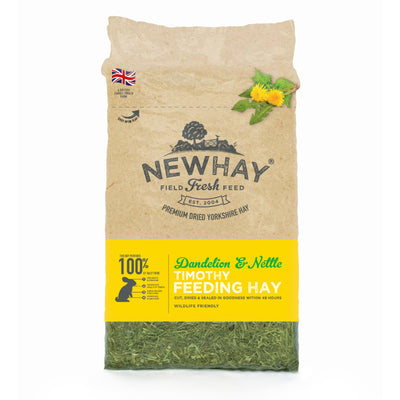
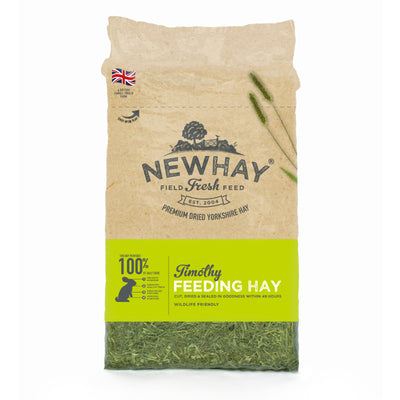
Guinea pigs need unlimited access to high-quality hay every single day. It supports digestion, prevents dental problems, and keeps them mentally stimulated. Our premium Timothy Hay and Meadow Hay for guinea pigs are carefully selected, dust-extracted, and packed fresh to provide the essential fibre your guinea pigs need to thrive.
Whether you're feeding a single pig or a growing herd, we have the right box size and bales to suit you. Shop the full range of guinea pig feeding hay below.
Hay isn’t just bedding; it’s the foundation of your guinea pig’s diet.
Guinea pigs should eat a diet made up of 80–90% hay, alongside fresh vegetables and fortified pellets.

When choosing hay for your guinea pig, it’s important to select high-quality, high-fibre options that support digestion and dental health. The two most popular choices are Timothy hay and Meadow hay.
Shop Hay for Guinea Pigs
Timothy hay is widely recommended by vets as the best hay for guinea pigs because it is:
Packed with natural goodness, our Timothy hay for guinea pigs is loved by pets and trusted by owners across the UK.
Shop Hay for Guinea Pigs
Meadow Hay offers a natural mix of grasses and textures, encouraging enrichment and variety.
Many owners like to mix Meadow Hay with Timothy Hay for added interest.

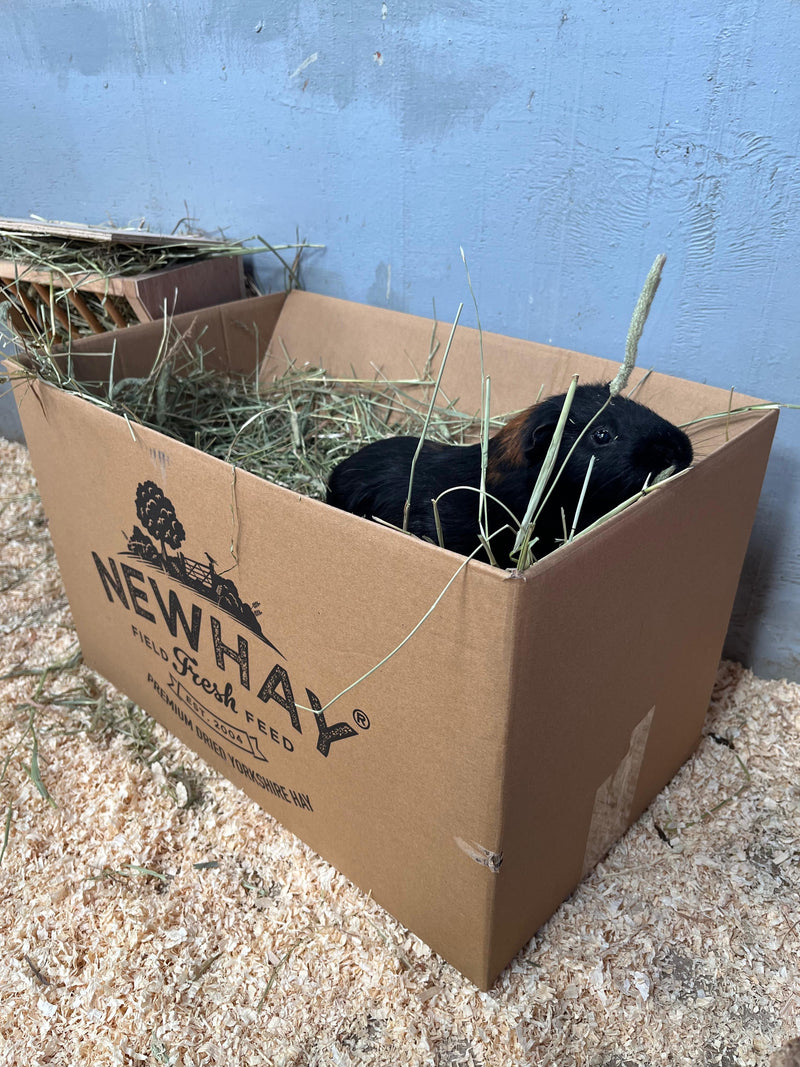
Guinea pigs should have unlimited access to fresh hay at all times.
A simple rule:
• Provide a pile at least the size of your guinea pig’s body daily
• Top up morning and evening
• Remove soiled hay and replace with fresh.
Hay should never run out.

At Newhay, we’re proud to grow our hay on our Yorkshire farm. We focus on quality from field to box.
That’s why small pets across the UK give Newhay hay the big paws up.

Hay can be placed in sleeping areas, but it should not replace proper bedding materials. Guinea pigs need absorbent bedding such as paper-based or fleece liners to keep their enclosure dry and hygienic. Hay should primarily be provided as food, and any soiled hay should be removed daily to maintain a clean living environment.
Yes, guinea pigs can safely eat Meadow Hay. However, because it can vary in texture and nutritional balance, many owners use Meadow Hay alongside Timothy Hay rather than as the sole source of hay.
Straw should not replace hay in a guinea pig’s diet. Straw is lower in fibre and much tougher, making it difficult to digest. While small amounts of straw can sometimes be used for bedding or extra warmth, it does not provide the essential nutrition guinea pigs need. Always provide unlimited access to fresh, high-quality hay instead.
The best hay for guinea pigs is Timothy Hay. It is high in fibre and supports healthy digestion and natural tooth wear. Meadow Hay can also be offered for variety, but Timothy Hay is generally recommended as the main staple.
Timothy Hay is ideal as a daily staple. Meadow Hay is great for variety and enrichment.
Guinea pigs need hay for healthy digestion and to naturally wear down their continuously growing teeth.
Guinea pigs should have unlimited access to fresh hay—it's the most important part of their diet.
Yes. Timothy Hay is vet-recommended for guinea pigs and ideal for daily feeding due to its high fibre and low calcium content.
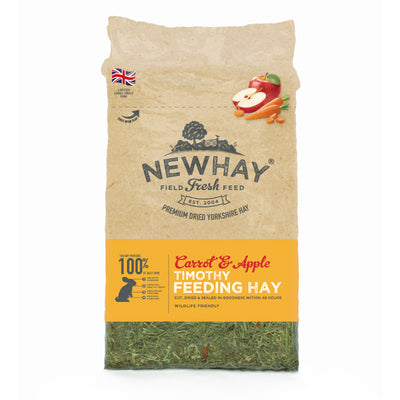
Yes, as long as the flavours are natural and pet-safe—like the apple, carrot, and dandelion blends we offer.
Second cut is usually preferred—it's soft enough to eat easily but still has enough fibre for digestive and dental health.
Yes. While alfalfa can be fed to very young guinea pigs, most can safely transition
to Timothy Hay early for long-term health.
Leafy greens like romaine lettuce, kale, parsley, and bell peppers are great choices. Feed fresh veggies daily in small amounts alongside unlimited hay.
Guinea pigs can eat Timothy Hay, fresh vegetables, hay-based pellets, and small amounts of fruit as a treat. Avoid sugary, processed, or high-calcium foods.
Give your guinea pigs the nutrition they deserve with Newhay’s Timothy hay – fresh, natural, and packed with fibre.
Need more advice? We have lots of useful information to help you take the best care of your guinea pig.
Explore our Pet care blog for facts and guides on how to care for your small pets.